A healthy appearance and a single number on a certificate do not close aflatoxin risk in peanuts. The 2025 revision of Codex CXC 55-2004 stresses that contamination can be heterogeneous and that sampling and testing should follow Codex or competent-authority plans. A global buyer therefore needs one acceptance file connecting production and drying to the lot, sample, laboratory, processing, storage and destination.
Define intended use before selecting a limit. Ready-to-eat peanuts and peanuts intended for further processing are not interchangeable categories. CXS 193-1995 sets a maximum level of 15 micrograms per kilogram for total aflatoxins in peanuts intended for further processing, meaning an additional treatment proven to reduce aflatoxin is expected. Do not automatically apply that figure to ready-to-eat peanuts, peanut butter or every destination. Confirm use, subsequent process and current destination law at the order date.
Define the lot before sampling. Codex describes a lot as an identifiable quantity sharing characteristics such as origin, variety, packing type, packer, consignor or markings. Combining different production areas, harvest periods, stores or processing lines into one large lot can hide risk. Record lot and sublot boundaries, weights, bag or big-bag counts, codes and physical segregation so the test result belongs to defined goods.
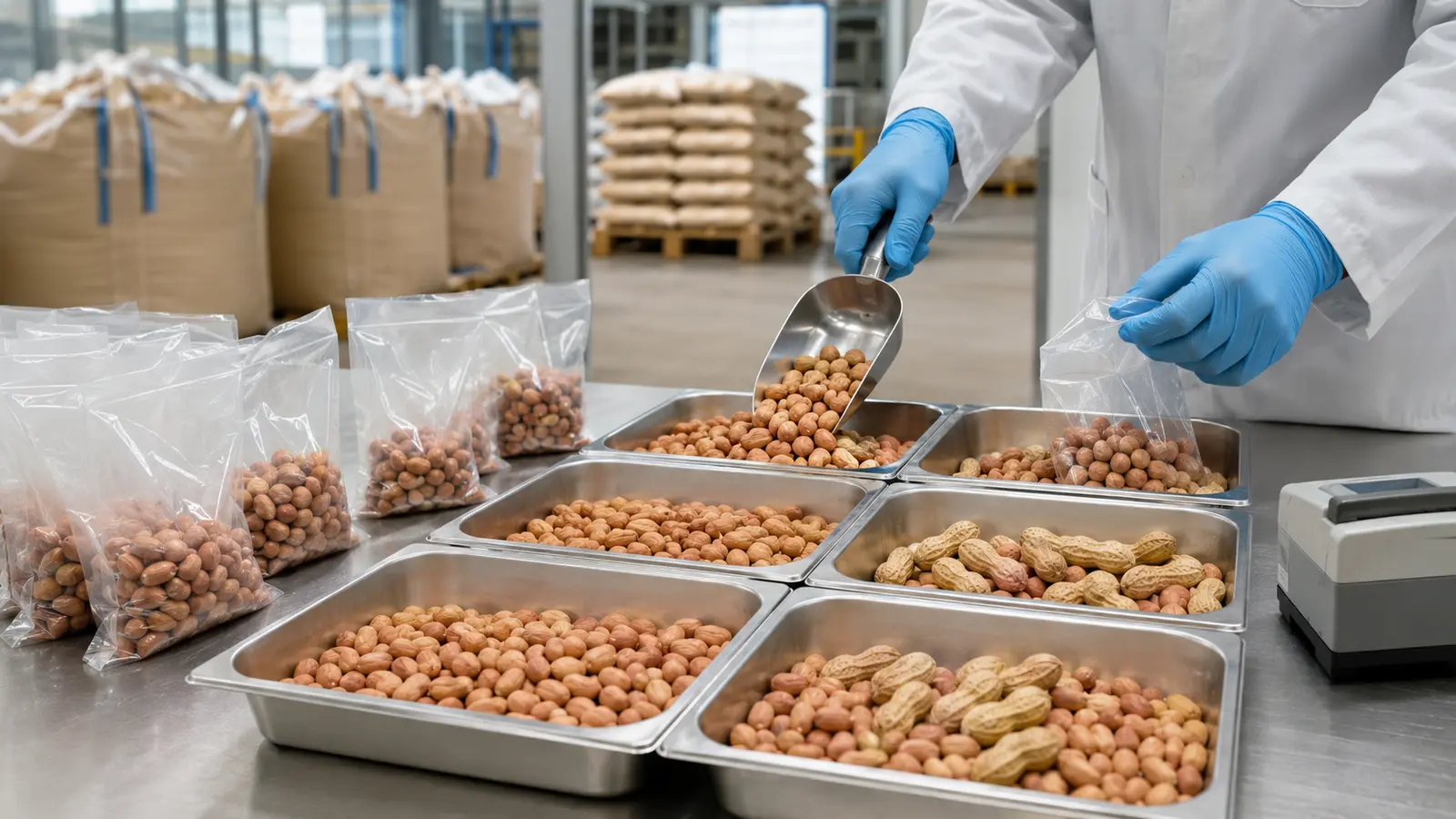
Do not replace the Codex plan with a small convenience sample. Annex III of CXS 193-1995 calls for one 20 kg laboratory sample of shelled peanuts, or 27 kg of unshelled peanuts, from each lot or sublot intended for further processing and evaluates it against 15 micrograms per kilogram. That scale illustrates why a seller-selected 500 g pouch is not shipment evidence. Document incremental-sample locations, aggregation, sample transport, grinding or homogenisation, test portion and sealed retain.
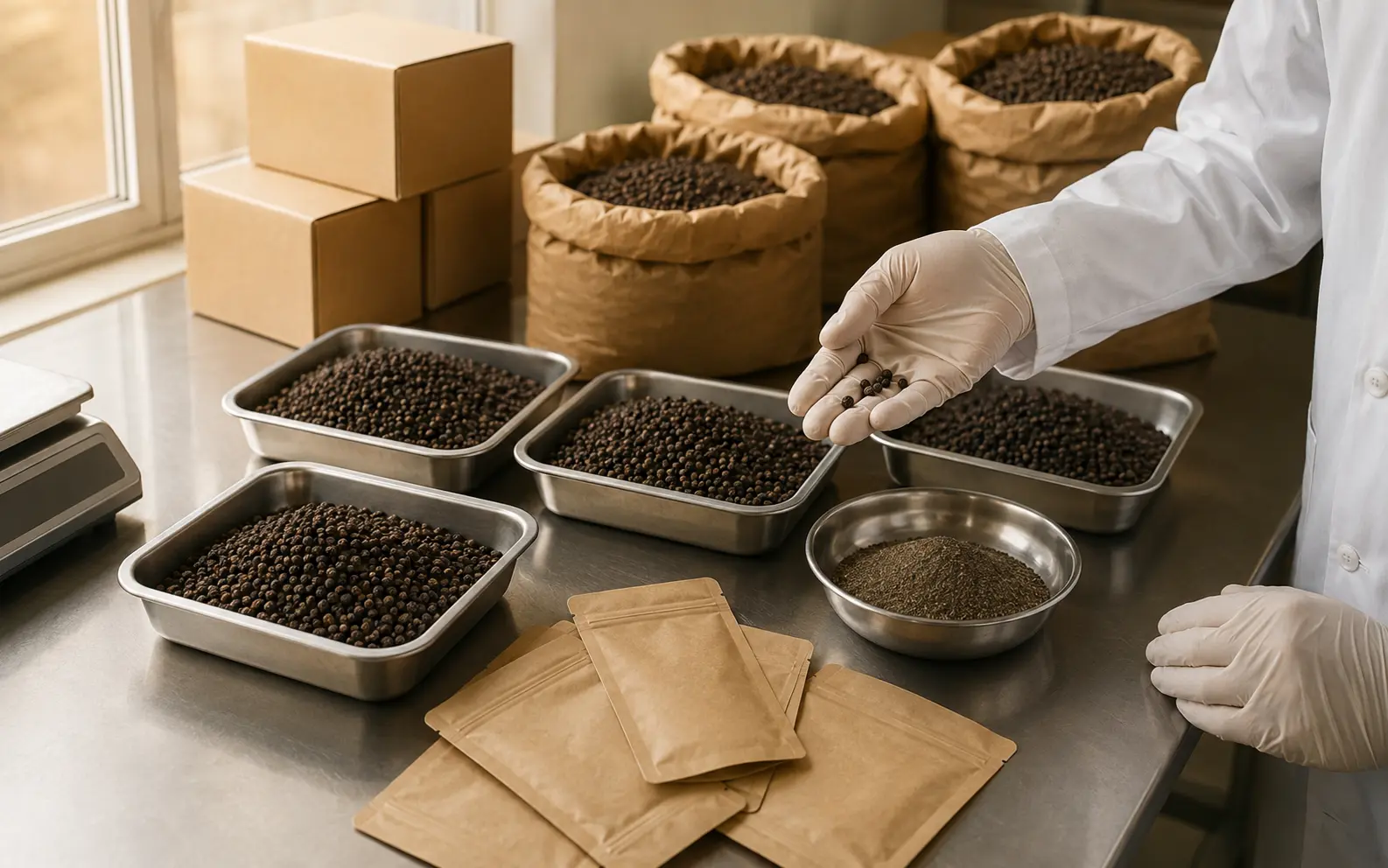
Sample preparation matters as much as sample collection. Aflatoxin can be concentrated in relatively few kernels. Poor grinding and homogenisation can make the analytical portion appear randomly low or high. Require the laboratory to state preparation, particle size, test-portion mass, analytical method, reporting limit, recovery, quality controls and uncertainty. Keep the retained sample sealed, traceable and under conditions that preserve its evidential value.
Make moisture and water activity gates for storage and transport. Revised CXC 55-2004 recommends initial windrow drying below 12 percent, then below 10 percent for in-pod peanuts and below 9 percent for kernels. It also states that aflatoxigenic fungi cannot grow or produce aflatoxins below water activity 0.7 and moisture content 9 percent. These values do not replace aflatoxin testing. Product form, measurement method, temperature, destination climate and transit time still belong in the moisture-control plan.
Connect segregation, sorting and processing to lot evidence. Codex discusses density separation, colour sorting, blanching and removal of damaged kernels as risk-reduction tools. Where a supplier claims a reduction process, obtain the flow diagram, controlled parameters, removal performance, rejected-product route and lot identity before and after processing. Blending a rejected lot with cleaner material to reach an acceptable average is not a sound control strategy.
Turn the COA from a generic PDF into a traceable record. It should identify product and presentation, lot, sampling date and location, sampler, aggregate-sample mass, laboratory, method, reported aflatoxins, unit, reporting limit and decision. Clarify whether the result is total aflatoxins or AFB1 and whether sampling occurred before sorting, after sorting or on final product. A laboratory result supports acceptance only when sample identity remains linked to the shipment.
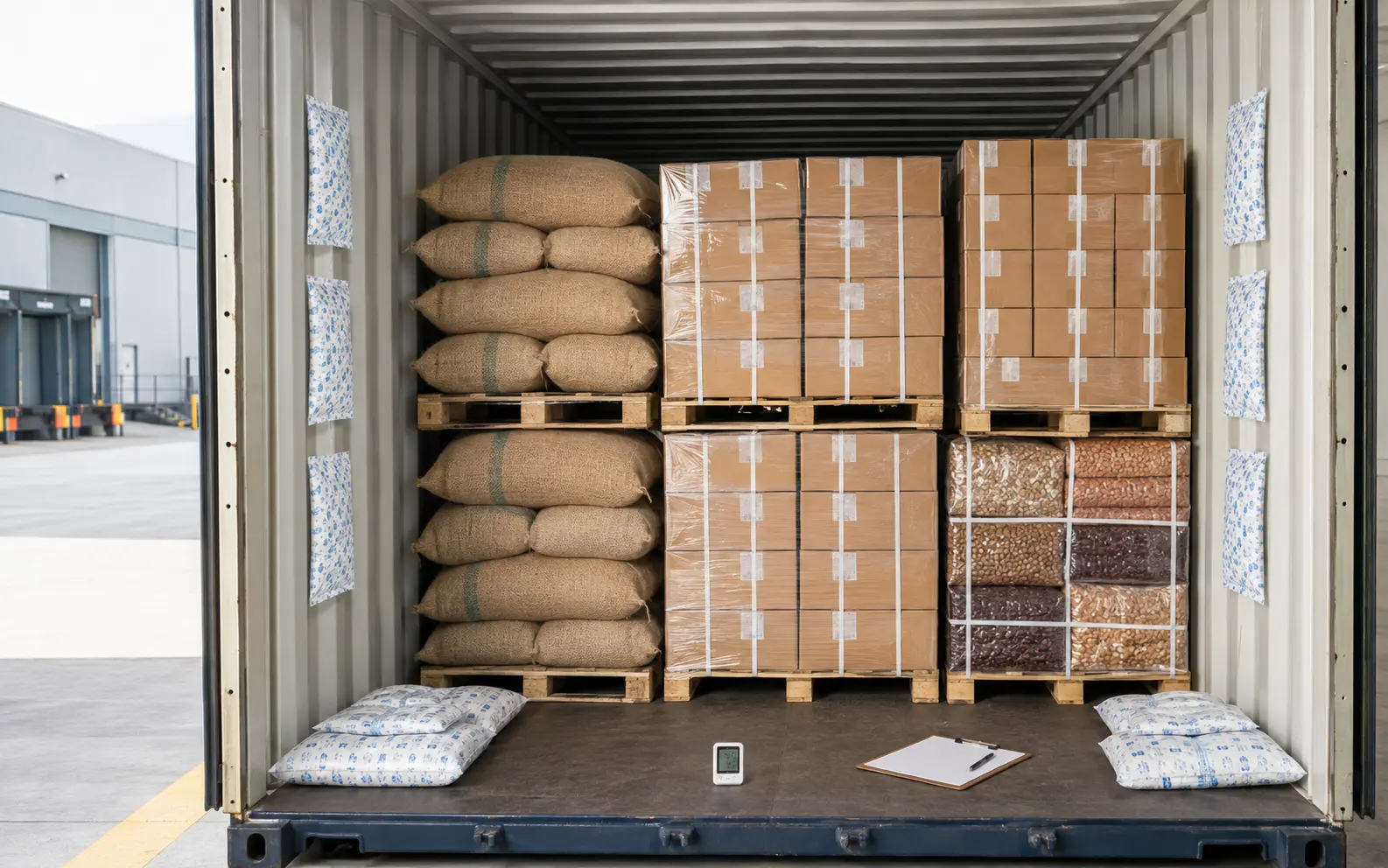
Use packaging and container controls to prevent re-wetting. Bags, liners, big bags, pallets and containers should be dry, clean, odour-free and protected from water ingress and condensation. Check product and pallet moisture, container floor and roof condition, stowage, wall clearance, route-specific ventilation or desiccant use and temperature or humidity records. Wetting, torn packs or abnormal delay should trigger documented quarantine and assessment rather than silent blending.
Write acceptance, rejection and retest rules before shipment. State the decision threshold, reference laboratory, retained sample for retest, method-dispute route and responsibility for delay, re-sorting, return or destruction. A buyer's internal action limit may be tighter than a legal maximum because of uncertainty, destination or use, but it should not be changed unilaterally after results are known.
Compare cost after controls and yield. Normalise sampling and testing, sorting loss, actual moisture, packaging, freight, delay, reprocessing and rejection exposure alongside price per tonne. A lower quote with mixed lots, incomplete history or uncertain moisture can have a higher delivered cost. Evaluate supplier performance by traceable lot outcomes, not by the number of certificates provided.
Global peanut aflatoxin control is not one test. It is a chain of intended-use and lot definition, representative sampling, sound preparation, moisture control, sorting and processing evidence, traceable certificates and a pre-agreed decision rule. Closing that file before loading makes offer comparison and non-conformity handling more defensible.
Use the guide to improve the brief—not to replace order verification.
Final quantity, sales unit, stock, price and timing remain order-specific.